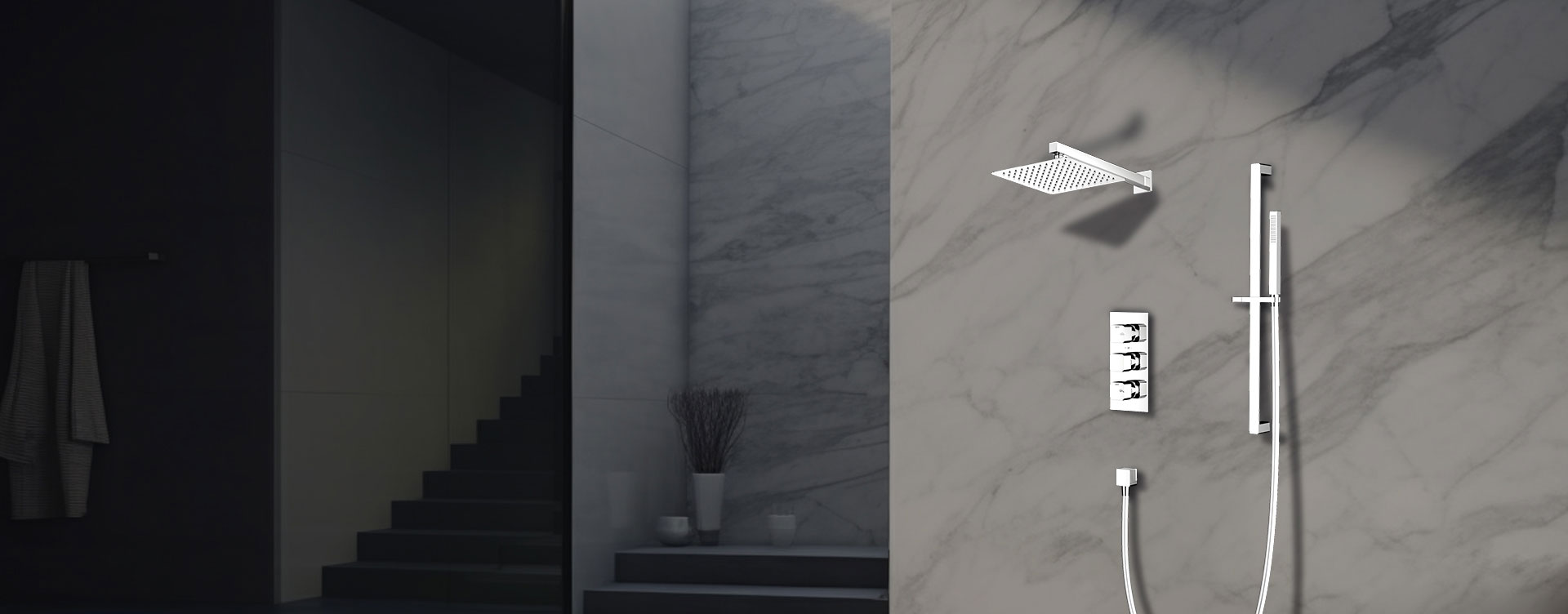
Replacing a shower head is one of the easiest and most effective ways to refresh your bathroom. Whether you’re upgrading to a rainfall model, a handheld design, or a water-saving thermostatic system, the process is simple and usually takes less than 15 minutes.
This guide explains step-by-step how to replace a shower head, which tools you’ll need, and tips to ensure a leak-free, professional finish — ideal for both standard and premium systems such as those by Global MoonShower.
You might need a new shower head if you notice:
Low or uneven water pressure due to mineral buildup
Leaking or dripping at the connection
Visible corrosion or rust
Outdated design that doesn’t fit your bathroom style
Clogged nozzles that can’t be cleaned effectively
Modern shower heads often feature anti-limescale silicone nozzles, multi-spray modes, and chrome or matte finishes, which can greatly improve both performance and appearance.
You don’t need specialized plumbing tools. A few household items will do:
| Tool / Material | Purpose |
|---|---|
| Adjustable wrench or pliers | To loosen/tighten connections |
| Soft cloth or rubber grip pad | Protects finish from scratches |
| Teflon (plumber’s) tape | Ensures watertight seal |
| Old toothbrush or rag | Cleans old residue |
| Vinegar or mild cleaner | Removes mineral buildup |
| New shower head | The replacement unit |
You don’t need to shut off the main water supply — just make sure the Shower Valve is off.
Place a towel or cloth in the tub or floor to catch any dripping water or debris.
Grasp the base of the shower head (where it connects to the pipe).
Turn counterclockwise by hand.
If it’s tight, wrap a cloth around the base and use an adjustable wrench to loosen gently.
Avoid scratching the finish — never use bare metal tools on chrome or matte coatings.
If the head doesn’t budge, apply a few drops of vinegar around the joint and wait 10 minutes to dissolve any mineral buildup.
Once the old head is removed:
Wipe the shower arm threads with a rag or toothbrush.
Remove old Teflon tape or sediment.
Clean with a bit of vinegar if mineral buildup is visible.
Ensure the threads are dry and smooth before installation.
Wrap Teflon tape clockwise (in the same direction the new head will turn).
Apply 2–3 layers to the threaded area only.
Smooth it down with your fingers to ensure tight coverage.
This creates a watertight seal and prevents leaks at the connection point.
Screw the new shower head clockwise by hand onto the shower arm.
Make sure it’s snug but not overtightened.
If the connection feels loose, use a wrench with a cloth padding for a gentle final turn — about a quarter turn past hand-tight.
For handheld shower heads, attach the mounting bracket and hose according to the manufacturer’s instructions before connecting the handheld sprayer.
Turn on the water slowly to test.
Observe the connection point:
If you see drips or small leaks, turn off the water and tighten slightly.
If leaks persist, remove the head, reapply fresh Teflon tape, and reinstall.
Once watertight:
Adjust the spray pattern and head angle.
For adjustable or handheld models, test all spray modes to confirm even water distribution.
| Type | Installation Notes |
|---|---|
| Fixed wall-mounted | Easiest to install — screw directly onto shower arm. |
| Handheld shower set | Connect hose to the diverter or bracket; check for rubber washers inside both ends. |
| Rain shower head | May require a longer or curved arm to extend over the shower space. |
| thermostatic shower set | Connects to a mixing valve; pressure and temperature must be balanced. |
| Dual-function (rain + handheld) | Use the included diverter valve to switch between outlets. |
If you’re upgrading to a thermostatic or exposed shower system, check compatibility with your existing hot and cold water supply spacing (typically 150 mm for most systems).
To keep it performing like new:
Clean monthly using vinegar to dissolve limescale.
Rub nozzles gently to remove mineral buildup.
Avoid abrasive cleaners or brushes on coated finishes.
Wipe dry after each use to prevent water spots.
Global MoonShower’s brass and stainless-steel shower heads feature anti-limescale silicone tips and durable finishes that make maintenance easy — requiring only light cleaning to retain shine and flow.
| Issue | Possible Cause | Fix |
|---|---|---|
| Water leaks at joint | Loose connection or worn washer | Reapply Teflon tape and retighten |
| Uneven spray | Clogged nozzles | Remove and soak in vinegar |
| Low pressure | Flow restrictor or buildup | Clean or remove restrictor |
| Whistling noise | Air trapped inside | Run hot water for 2 minutes to clear |
Never overtighten connections — it can damage threads or crack fittings.
Always support the shower arm when applying torque.
For ceiling-mounted rain heads, ensure the arm is securely anchored in the wall or ceiling before installation.
| Step | Action |
|---|---|
| 1 | Turn off shower and remove old head |
| 2 | Clean and dry shower arm threads |
| 3 | Wrap new Teflon tape |
| 4 | Screw on new shower head by hand |
| 5 | Test for leaks and adjust angle |
| 6 | Maintain regularly for best performance |
Replacing a shower head is an easy way to upgrade your bathroom experience — improving both style and water performance. With just a few tools and minutes, you can achieve a professional, leak-free installation.
For premium results, choose a shower head made from brass or stainless steel with anti-limescale nozzles and adjustable spray modes, like those from Global MoonShower. A quick replacement not only restores strong, even water pressure but also enhances the comfort, appearance, and longevity of your shower system.
Previous: How To Replace Shower Valve