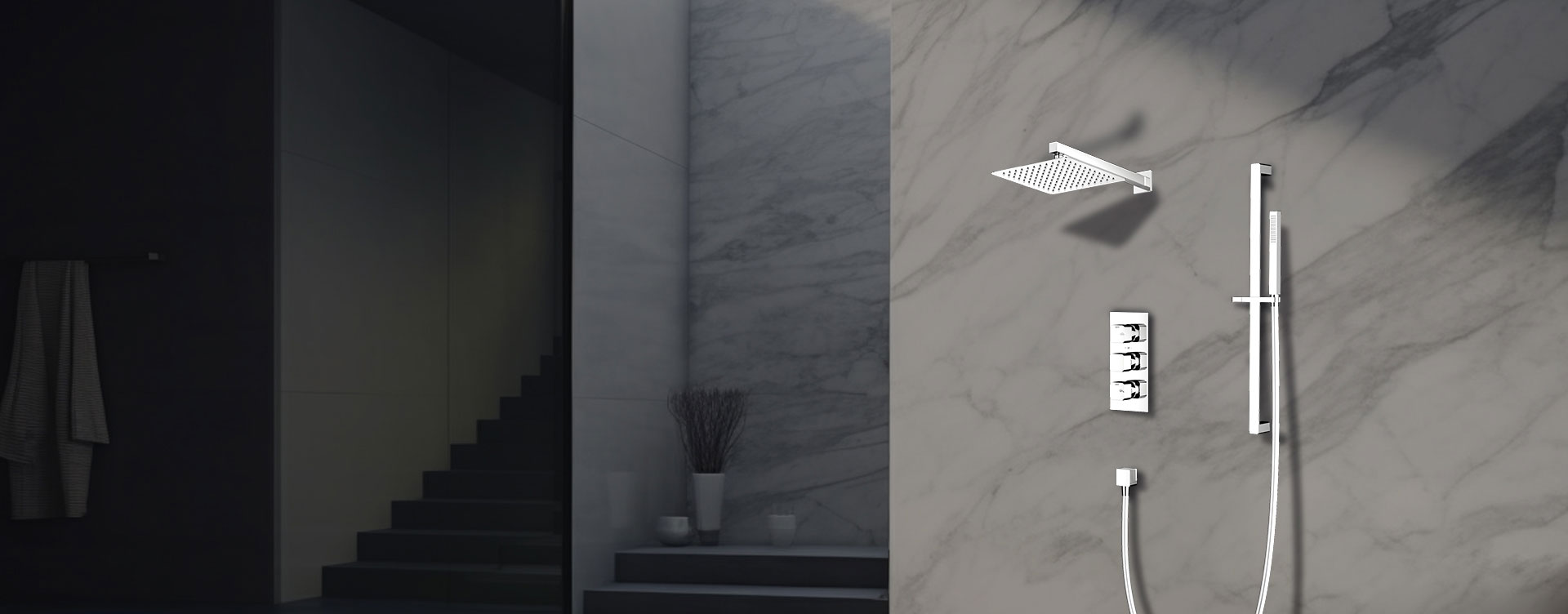
Replacing a Shower Valve is a more advanced project than changing a shower head, but it’s still manageable for confident DIYers. The shower valve — also known as the mixing valve — controls both water temperature and flow. Over time, it can wear out, leak, or fail to regulate temperature properly.
This guide walks you through how to replace a shower valve safely and correctly, covering both manual and thermostatic systems, and includes tips for maintaining precision valves like those found in Global MoonShower shower sets.
You might need a new valve if you notice:
Water leaks from behind the handle or wall
Inconsistent temperature control (sudden bursts of hot or cold)
Stiff handle movement or corrosion inside the valve body
Poor water flow despite clean pipes
Noise (whistling or rattling) when water is running
Modern thermostatic valves are designed to last years, but mineral buildup or internal seal wear can affect performance.
Understanding your current valve helps you choose a suitable replacement.
| Valve Type | Description | Typical Use |
|---|---|---|
| Manual Mixing Valve | Manually mixes hot and cold water using one or two handles | Basic showers |
| Pressure-Balancing Valve | Keeps temperature steady when water pressure fluctuates | Standard homes and hotels |
| Thermostatic Mixing Valve (TMV) | Automatically regulates temperature to a set level | Premium showers like Global MoonShower |
| Diverter Valve | Redirects water between shower outlets | Dual-shower systems |
| Cartridge Valve | Replaceable cartridge inside handle body | Modern concealed sets |
| Tool / Material | Purpose |
|---|---|
| Adjustable wrench | Loosen and tighten connections |
| Screwdrivers (Phillips & flat) | Remove handles and plates |
| Utility knife | Cut sealant or caulk |
| Plumber’s tape (Teflon tape) | Seal threaded joints |
| Pipe wrench (if needed) | Handle stubborn fittings |
| Allen key | Loosen handle set screws |
| Caulk and gun | Seal trim plate after installation |
| Replacement valve or cartridge | The new part to install |
| Towels or bucket | Catch any remaining water |
| Silicone grease | Lubricate new seals |
If you’re upgrading to a thermostatic valve, make sure the hot and cold inlet spacing (usually 150 mm) matches your wall plumbing.
Turn off the water supply.
Shut off both hot and cold lines at the main valve.
Open the shower to release pressure and drain remaining water.
Protect the area.
Place towels in the tub or shower base to catch drips.
Cover nearby fixtures to avoid scratching finishes.
Locate your valve type.
If your system has a removable trim plate (common in concealed models), unscrew it to access the valve body behind the wall.
For exposed valves, the replacement process is simpler — the valve is visible and mounted on the wall.
Use a screwdriver or Allen key to remove the handle screw.
Pull the handle off carefully.
Unscrew the trim plate (the decorative cover) and set it aside.
Cut through any silicone sealant with a utility knife.
For concealed valves, remove the escutcheon plate to expose the valve body inside the wall cavity.
For exposed systems (like Global MoonShower’s), unscrew the nuts connecting the valve to the hot and cold pipes — these are usually surface-mounted.
Use a wrench or pliers to loosen and disconnect the hot and cold water inlets.
Detach the outlet pipe leading to the shower head.
Remove the valve body completely.
Tip: Have a towel or bucket ready to catch any remaining water in the lines.
Apply plumber’s tape to all threaded joints (2–3 layers clockwise).
Insert the new valve into position.
Connect the hot and cold water inlets — ensure hot (left) and cold (right) are correctly aligned.
Tighten connections using a wrench, but avoid overtightening.
Connect the outlet that leads to the shower head or diverter.
If it’s a thermostatic valve, check the orientation marks (↑ for outlet, ← for hot, → for cold).
Turn on the main water supply.
Open the shower valve and check all joints for leaks.
If dripping occurs, turn off the supply, retighten connections, and reapply Teflon tape if necessary.
Once leak-free, reinstall the trim plate and handle.
Apply a thin line of silicone caulk around the trim edge to seal against moisture.
Allow it to cure for a few hours before using the shower.
Sometimes, you don’t need to replace the entire valve — just the cartridge inside.
Turn off water supply.
Remove handle and trim.
Use pliers to pull the old cartridge straight out.
Insert new cartridge (lubricated with silicone grease).
Reinstall handle and test.
This can restore smooth operation and temperature control for thermostatic or mixer valves without replacing the full assembly.
If you’re working with a thermostatic valve (common in Global MoonShower products):
Set the temperature control knob to 38°C (factory default) before installation.
After installation, let hot and cold water run for 1 minute to self-balance the valve.
Avoid using harsh cleaners on chrome or matte finishes around the control knobs.
These valves are engineered for precise control, so proper calibration ensures accurate temperature response and long-term performance.
| Task | Frequency | Purpose |
|---|---|---|
| Clean filter screens | Every 6 months | Prevent debris from blocking flow |
| Descale cartridge | Every 6–12 months | Maintain smooth temperature adjustment |
| Check seals and washers | Annually | Avoid leaks |
| Lubricate moving parts | Annually | Preserve smooth handle rotation |
Always verify water temperature before using after installation.
If your valve is behind a tiled wall, create an access panel for future maintenance.
When in doubt about pipe soldering or concealed connections, consult a licensed plumber.
| Step | Action |
|---|---|
| 1 | Turn off water and drain lines |
| 2 | Remove handle and trim plate |
| 3 | Disconnect old valve |
| 4 | Apply Teflon tape and install new valve |
| 5 | Test for leaks |
| 6 | Reassemble trim and handle |
| 7 | Calibrate thermostatic settings if needed |
Replacing a shower valve restores proper temperature control, water flow, and leak-free performance. With patience and the right tools, you can complete the job confidently in under two hours.
For modern systems — especially thermostatic or exposed sets from Global MoonShower — precise installation ensures lasting comfort, efficiency, and style. Whether you’re upgrading your bathroom or fixing a leak, a new valve will deliver smooth operation, perfect temperature balance, and years of reliable use.
Previous: How To Clean Shower Drain