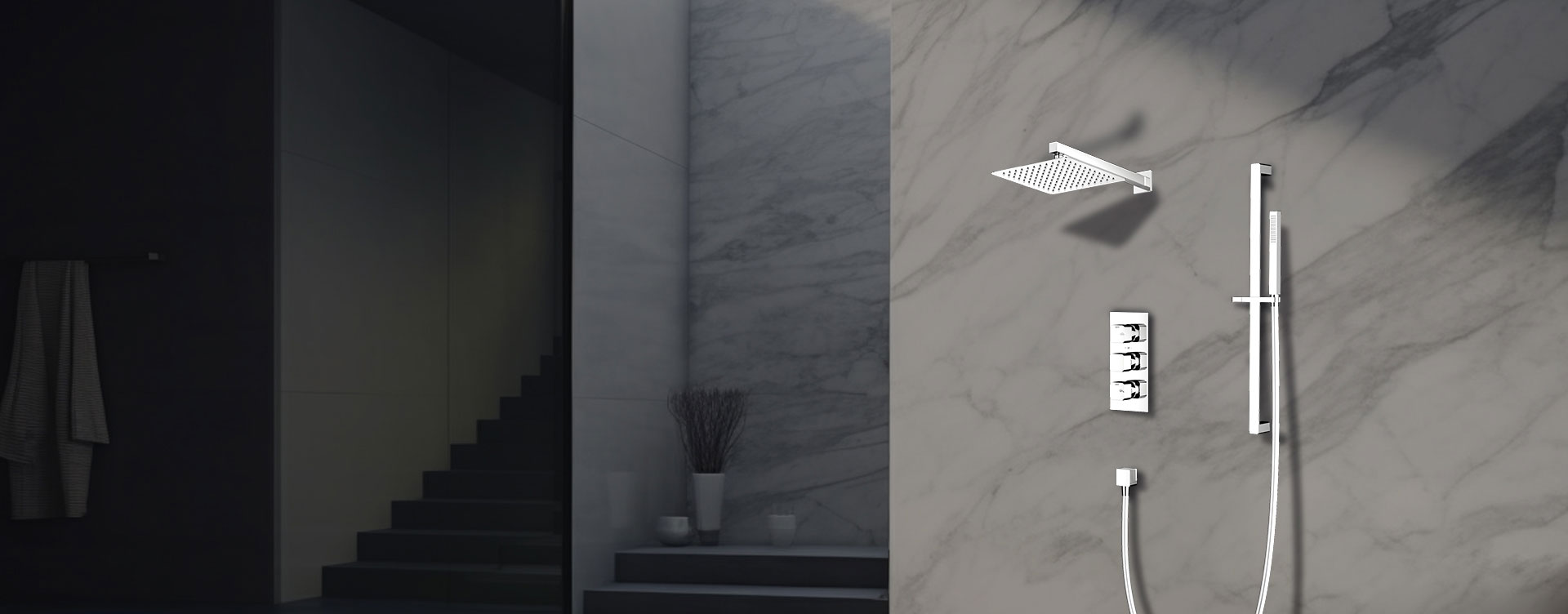
Replacing a shower handle is a quick, effective way to fix leaks, improve temperature control, or give your bathroom a refreshed look. Most homeowners can do it in less than 30 minutes with just a few basic tools — no plumber required.
This step-by-step guide will show you how to replace a shower handle safely and properly, whether it’s a single-lever, dual-handle, or thermostatic system like those featured in Global MoonShower shower sets.
Before starting, determine which kind of handle you have.
| Type | Description | Typical System |
|---|---|---|
| Single-handle mixer | One lever controls both temperature and flow | Modern homes |
| Dual-handle | Separate knobs for hot and cold | Older or classic designs |
| Thermostatic handle | Two knobs: one for temperature, one for volume | Premium systems (e.g., Global MoonShower) |
| Diverter handle | Switches between outlets (handheld, rain, tub) | Multi-function setups |
The replacement steps are similar across types but vary slightly based on how the handle is attached.
| Tool / Material | Purpose |
|---|---|
| Phillips & flathead screwdrivers | Remove screws and covers |
| Allen key (hex wrench) | Loosen set screws in modern handles |
| Adjustable wrench | Tighten or remove nuts |
| Utility knife | Cut caulk or sealant if needed |
| Cloth or towel | Protect the finish |
| Vinegar or mild cleaner | Remove limescale buildup |
| Silicone grease | Lubricate valve stem for smooth operation |
| Replacement handle kit | New handle or decorative trim |
Tip: If you’re working with a thermostatic or designer faucet (like Global MoonShower), make sure the new handle matches the valve model to maintain temperature calibration.
Shut off the water at the main valve or the bathroom shutoff valve.
Open the shower handle to release any remaining pressure and drain excess water.
Locate the screw in the center of the handle or behind a decorative cap.
Pry off the cap using a flathead screwdriver (if present).
Remove the screw with a Phillips screwdriver.
Pull the handle straight off the valve stem.
Look for a small hole or opening on the underside or side of the handle.
Insert the appropriate Allen key (hex wrench).
Turn counterclockwise to loosen the set screw.
Slide the handle off the valve stem.
Caution: Avoid twisting forcefully — it can damage the valve stem inside the wall. If stuck, spray a bit of vinegar around the base and wait 10 minutes.
If your new handle comes with a matching escutcheon (wall plate):
Unscrew or pull off the old trim plate.
Use a utility knife to cut through any caulk or sealant around it.
Clean the area thoroughly with mild cleaner or vinegar.
This step gives a neat, watertight finish when you install the new handle.
Once the handle is off:
Wipe away dirt, corrosion, or residue from the valve stem using a cloth.
Check for cracks, rust, or limescale buildup.
Apply a small dab of silicone grease to the stem for smoother handle rotation.
If water still drips from the stem when the water is off, you may need to replace the valve cartridge, not just the handle.
Slide the new handle onto the valve stem.
Make sure it’s oriented correctly — typically facing downward for “off.”
For screw-type handles: insert the screw and tighten until snug.
For set-screw types: insert the Allen key and tighten gently.
Avoid overtightening to prevent thread damage or cracking.
Fit the new escutcheon plate over the valve.
Apply a small bead of clear silicone sealant around its edge for waterproofing.
Turn the main water supply back on.
Test the handle for smooth movement and proper hot/cold direction.
Check for any leaks around the handle or trim plate.
If the handle operates in reverse (hot and cold swapped), remove it, rotate it 180°, and reinstall.
If your system is thermostatic (common in Global MoonShower setups):
The temperature handle usually includes a safety stop at around 38°C.
When replacing, align this stop correctly according to the manufacturer’s marking.
Avoid removing or turning the cartridge inside unless you’re calibrating temperature or replacing it.
Proper alignment ensures your shower maintains accurate, consistent temperature control.
| Mistake | Result | Solution |
|---|---|---|
| Forgetting to turn off water | Sudden spray or leak | Always shut off water first |
| Forcing a stuck handle | Damages valve stem | Use vinegar to dissolve buildup |
| Misaligned installation | Reversed hot/cold | Rotate handle 180° |
| Losing small screws | Handle won’t stay secure | Keep all screws in a tray |
| Overtightening | Cracks handle or trim | Tighten gently and evenly |
| Task | Frequency | Purpose |
|---|---|---|
| Clean handle with mild cleaner | Monthly | Prevents limescale buildup |
| Tighten set screws | Every 6 months | Keeps handle stable |
| Lubricate valve stem | Once a year | Ensures smooth rotation |
| Check silicone seal | Yearly | Prevents water from entering wall |
Avoid abrasive cleaners or scouring pads — they can scratch chrome or matte finishes.
| Step | Action |
|---|---|
| 1 | Turn off water supply |
| 2 | Remove old handle (screw or set screw) |
| 3 | Clean valve stem and trim area |
| 4 | Install and align new handle |
| 5 | Seal trim and test operation |
Replacing a shower handle is a simple DIY upgrade that restores smooth operation and enhances your bathroom’s appearance. By following these steps — shutting off the water, removing the old handle, cleaning, and carefully installing the new one — you can complete the job quickly and confidently.
For thermostatic systems like those by Global MoonShower, precise handle alignment ensures consistent water temperature and long-lasting reliability.
With minimal tools and care, you’ll have your shower handle replaced, watertight, and working like new in no time.
Previous: